Services
Supporting your child’s communication growth during the most important early years
From first words to confident conversations, we tailor therapy at each stage of childhood.
Services
From first words to confident conversations, we tailor therapy at each stage of childhood.
Speech Therapy for Children by Age
Toddlers (18–36 months): Early Communication Skills
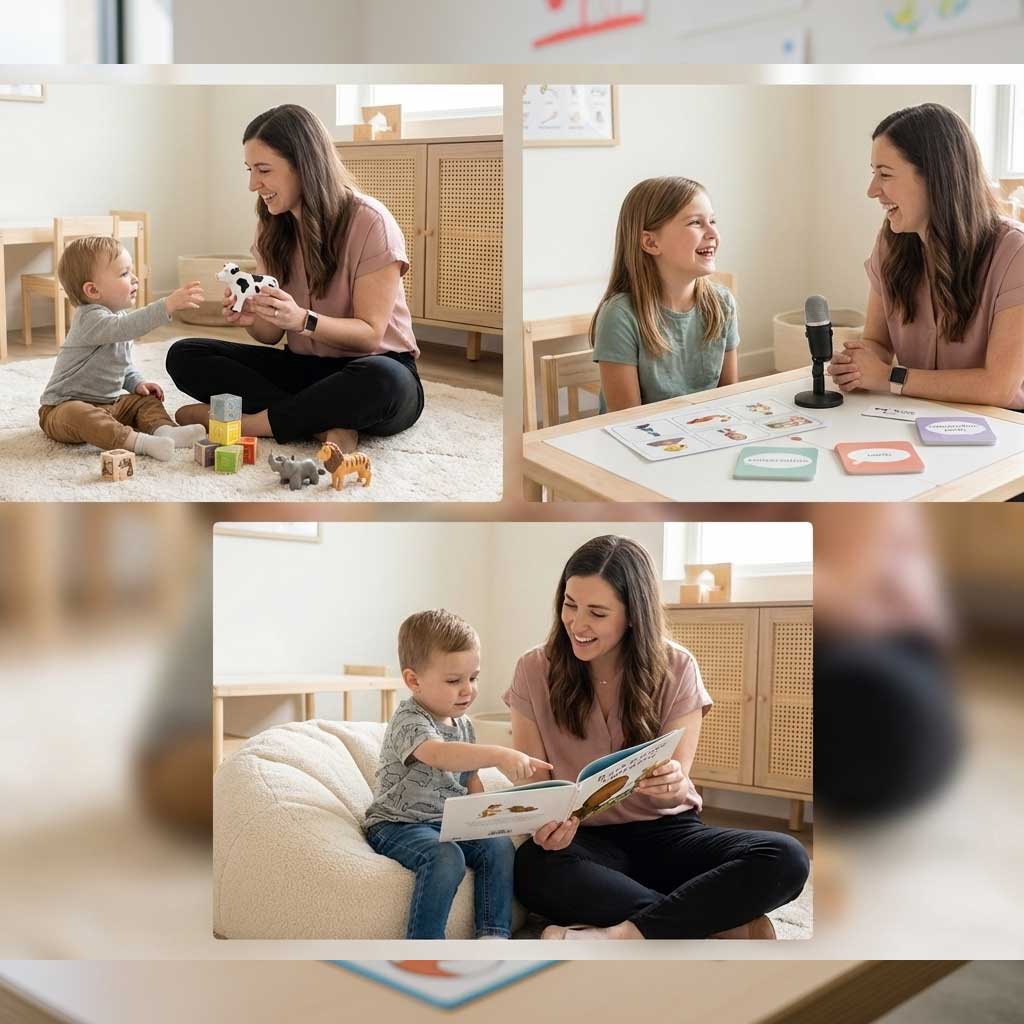
We spark early communication through playful routines. You’ll see how we pause and wait for turns, follow your child’s lead, and model short words and two-word combinations that fit the moment. Early goals often include first words, choices, pointing and gestures, simple directions, and back-and-forth during favorite activities.
Preschool (3–5 years): Sentences, Stories, and Clearer Sounds
We grow longer sentences, early storytelling, and clearer speech sounds in ways that feel fun and achievable. Picture books and visuals make abstract ideas concrete; play keeps motivation high. At home, you’ll try short retells after reading, simple who/what/where/when/why prompts, and quick “sound checks” during games. We also prepare for circle time, centers, and early group activities so children participate with confidence.
Early School Age (6–12 years): Carryover for Home and Class
We focus on carryover—clearer speech in conversation, stronger vocabulary and grammar for academics, and confident participation in class and groups. Kids learn to notice their speech and use simple strategies to self-correct. For language, we target comprehension, summarizing, and structured storytelling that support reading and writing. For fluency and voice, we build gentle tools and steady habits that reduce pressure and strain.
What You’ll See at Home
- More consistent words and new combinations (toddlers)
- Longer sentences, clearer storytelling, and better follow-through on directions (preschool)
- Smoother conversation, stronger class participation, and more confident reading aloud (school-age)
Parent Partnership: Small Steps That Work
After each session, you’ll get two or three micro-practice ideas that fit daily life—snack time, car rides, bedtime reading. We’ll keep steps small and repeatable so success builds without pressure. We also adjust when life gets busy—consistency matters, but sustainability is what keeps progress moving.
Online and Hybrid Care Across Texas
Online therapy can be effective with adapted materials, visuals, and light parent coaching for younger children. Many families choose hybrid plans—mixing in-person and online—to balance schedules and maintain momentum.
When to Consider an Evaluation
If you’re seeing persistent frustration with talking, difficulty following directions, unclear speech beyond expected ages, or discomfort speaking up in groups, an evaluation can bring clarity and a plan you can follow.
Explore services by need—articulation therapy, language therapy for children, stuttering therapy, voice therapy for children—or schedule an evaluation → /services, /contact
Clear Milestones and Frequent Updates
Early goals often include using first words for favorite people and things, building two-word combinations (“more juice,” “mama help”), and understanding simple directions in familiar routines. As your child grows, we expand to longer phrases, early storytelling, and social language, such as greetings and asking for help. You’ll get brief updates and simple visuals, so you always know what’s improving.
Support for Preschool Transitions
If your child is starting preschool, we’ll adapt strategies for circle time, centers, and early group activities. With your permission, we share simple prompts with teachers to help routines feel familiar, and expectations remain consistent across settings.
Online and Hybrid Options
Early intervention can work well online with gentle parent coaching and screen-friendly activities. If travel or schedules are tricky, hybrid care keeps momentum strong. Sessions are 30 minutes and scheduled based on clinical need and availability.
When to Consider an Evaluation
Every child grows at their own pace. Signs to check in include very limited words after 18 months, difficulty imitating sounds, or challenges understanding simple directions in familiar routines. An evaluation will clarify strengths and needs and give you a hopeful, practical plan.
Frequently Asked Questions
How do goals change as my child grows?
We begin with foundations (first words, simple directions), then build sentences and storytelling, and finally target classroom demands (vocabulary, reading aloud, presentations).
Can siblings help with practice?
If helpful, yes. Siblings can model turn-taking and join simple games that invite talking. We’ll guide you so it stays positive.
What if my child is nervous about therapy?
We make early visits especially welcoming with familiar topics and flexible activities. Comfort comes first—when kids feel seen and safe, they try more.
How do you coordinate with teachers?
With your permission, we align prompts and expectations for class. Consistency supports carryover during reading, group work, and class discussions.

Gentle fluency therapy for kids. Reduce tension, build confidence, and support participation at home and school.
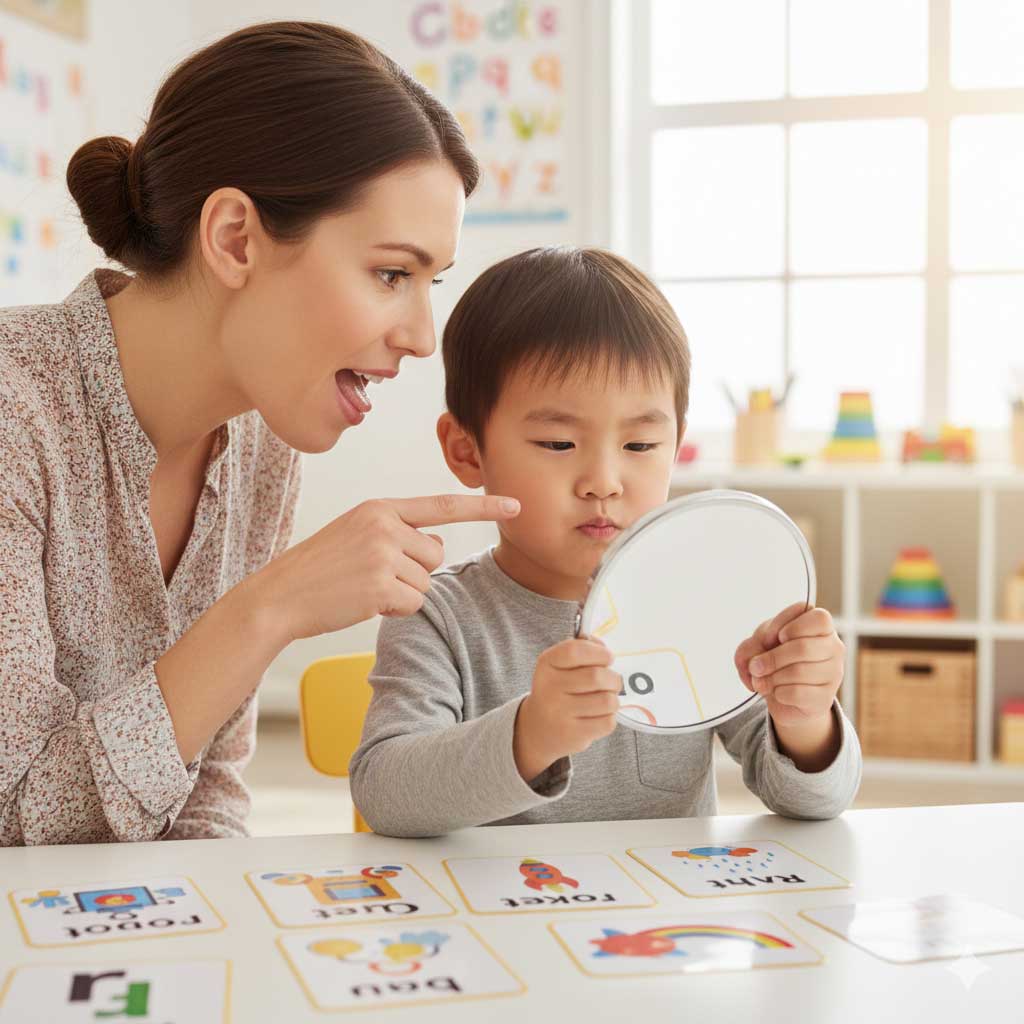
Our articulation therapy improves speech clarity with fun, personalized strategies tailored to your child’s needs.

Help for hoarseness and vocal fatigue. Healthy voice habits, breath support, and child-friendly exercises.